
Measured drying across Greater Houston
Structural Drying & Moisture Detection in Houston
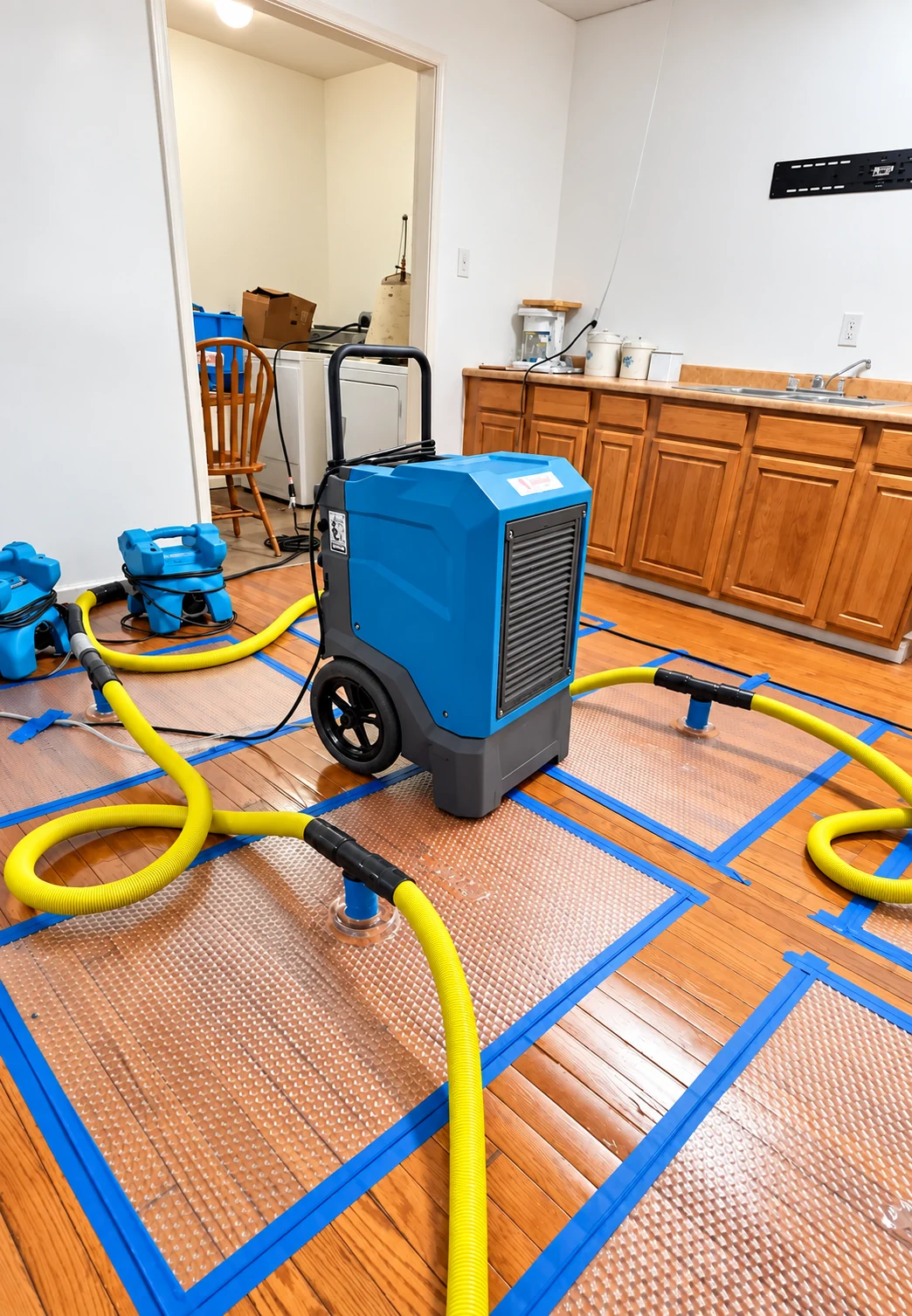
Renova maps the affected materials, places professional drying equipment and documents measured progress instead of relying on appearance alone.
Find it. Dry it. Verify it.
Moisture inspections and moisture mapping after water damage.
Dry on the surface doesn’t always mean dry underneath. We take moisture readings on accessible walls, flooring and subfloors, map affected areas room by room, and use those readings to plan and monitor drying.
Inspection & drying
The right tools. A measured approach.
From the first moisture check to controlled drying. If water is still standing, start with emergency water extraction and mitigation.
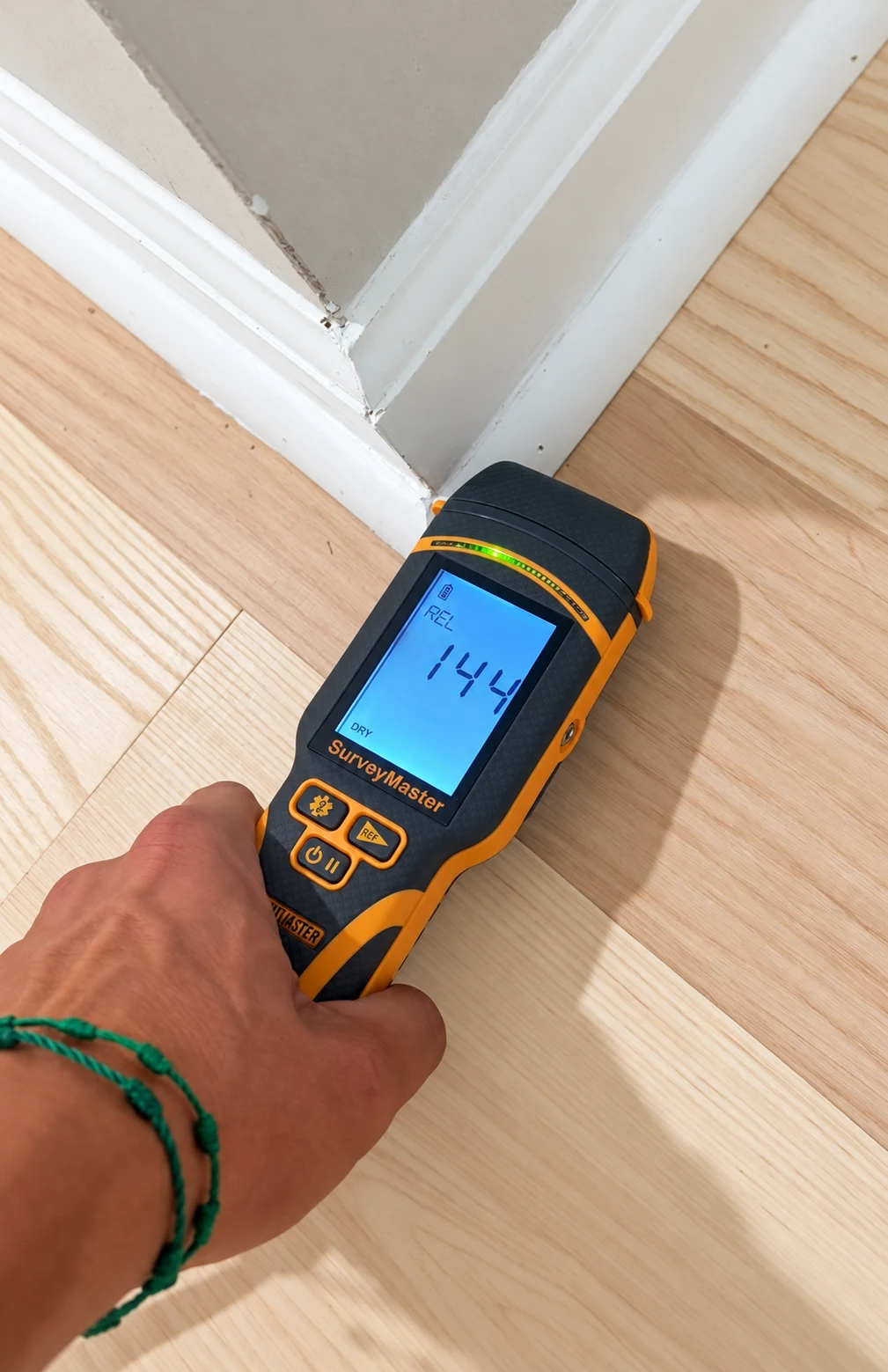
Moisture mapping
Check affected materials and establish initial readings.
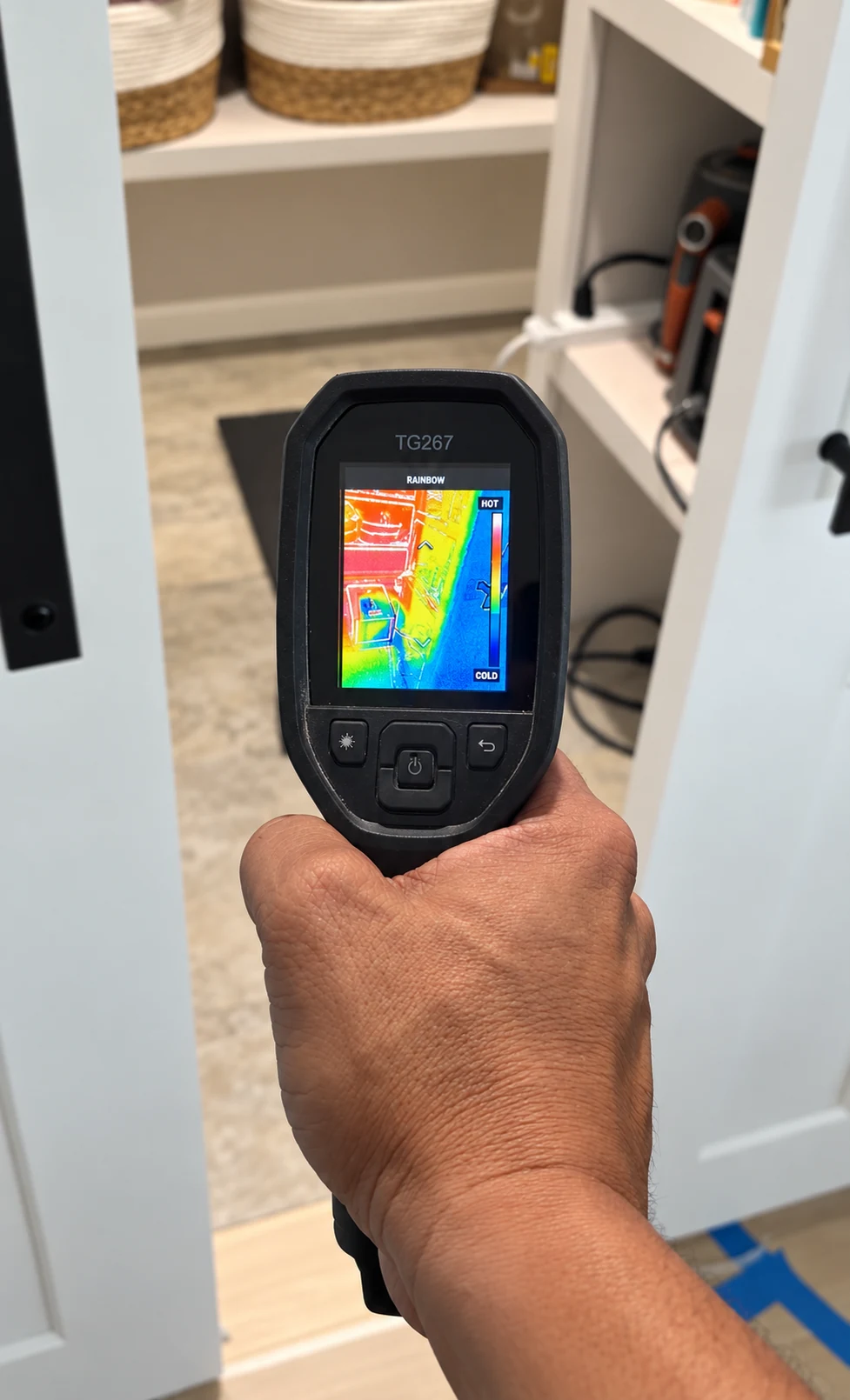
Thermal inspection
Locate patterns that need direct moisture testing.
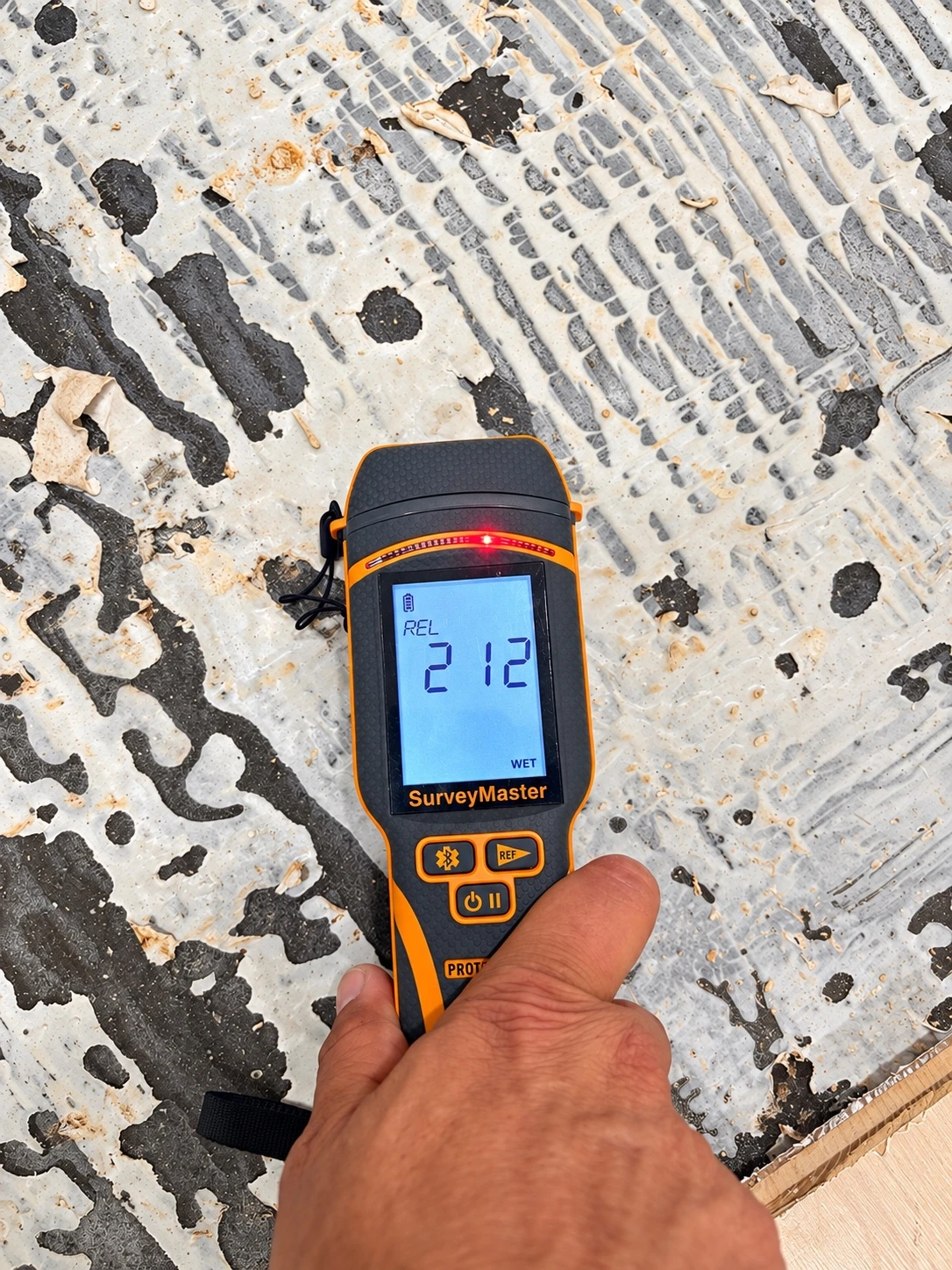
Below the surface
Assess the materials beneath removed flooring.
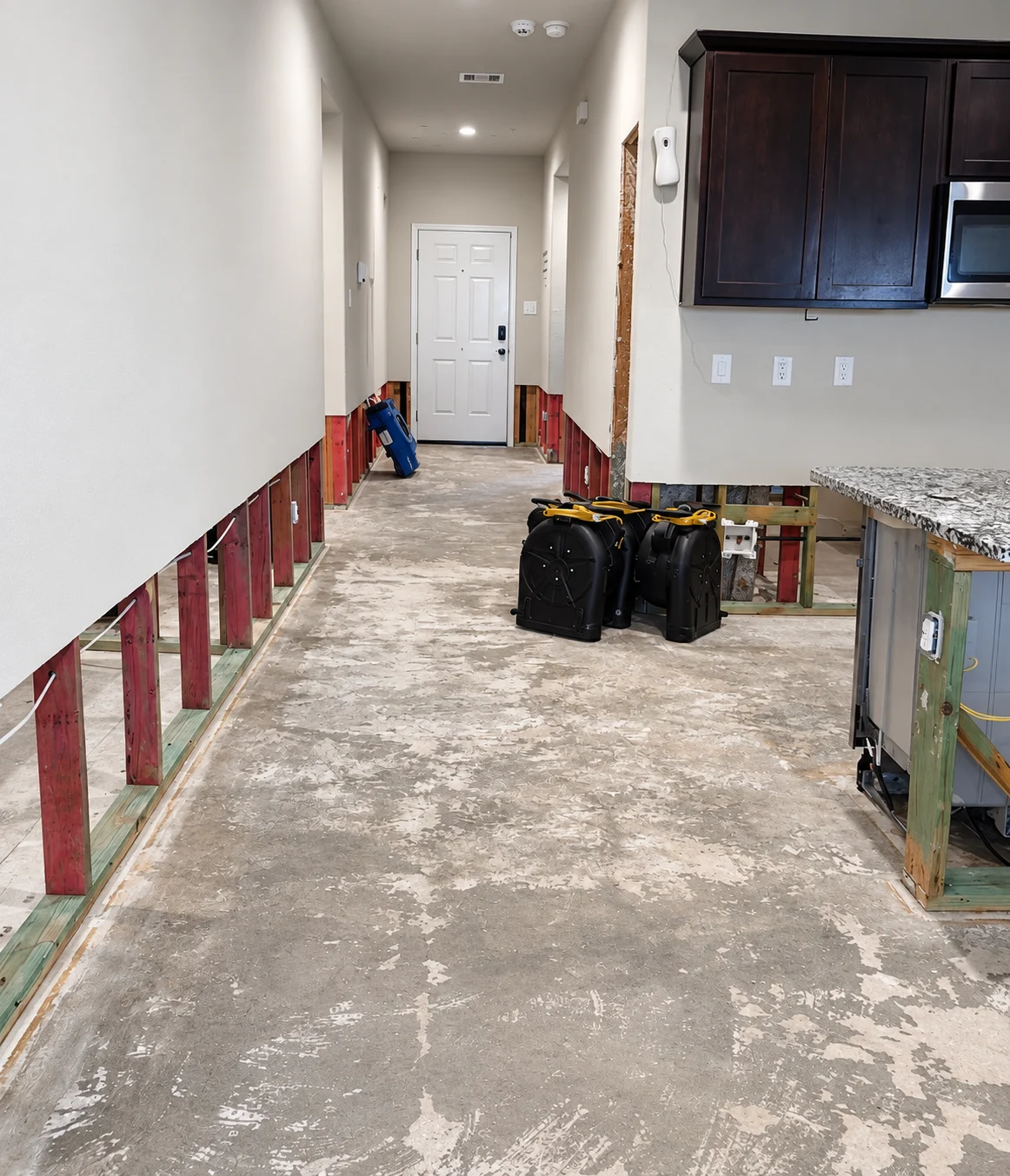
Controlled air movement
Support evaporation from affected materials.
Targeted floor drying
Direct drying where the flooring assembly allows.
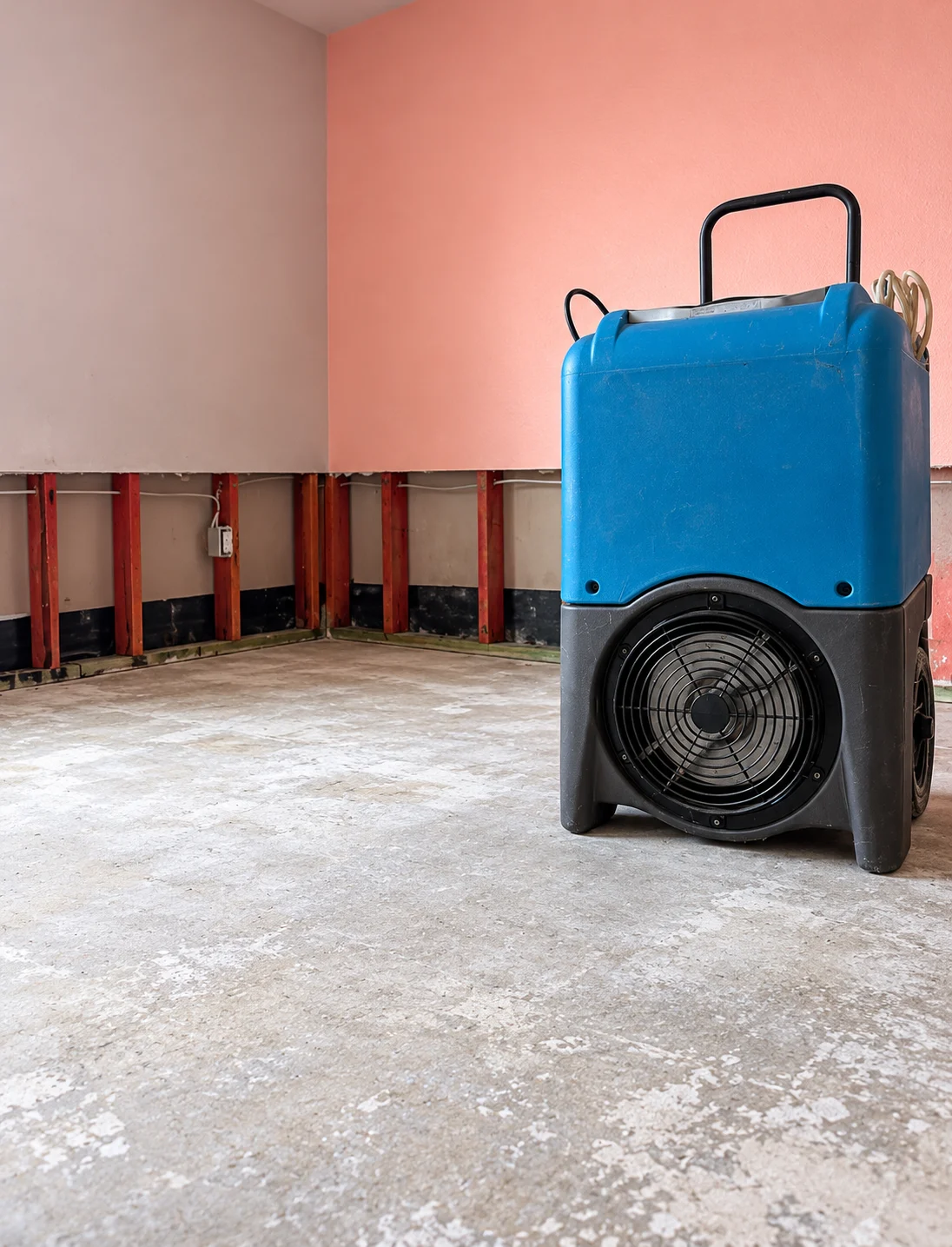
Dehumidification
Remove moisture from the air as materials dry.
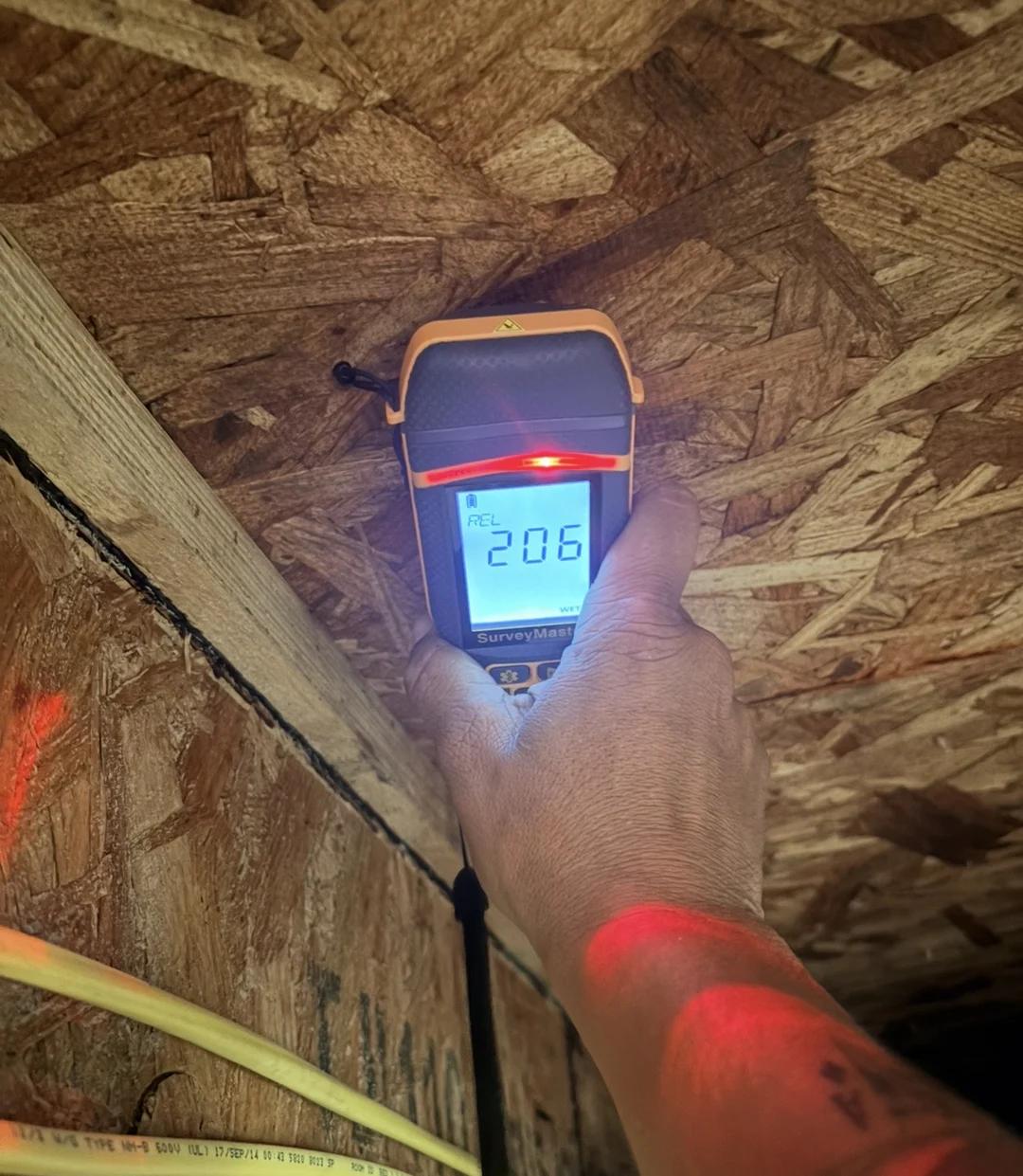
Moisture check on sheathing
A field reading on exposed OSB sheathing.
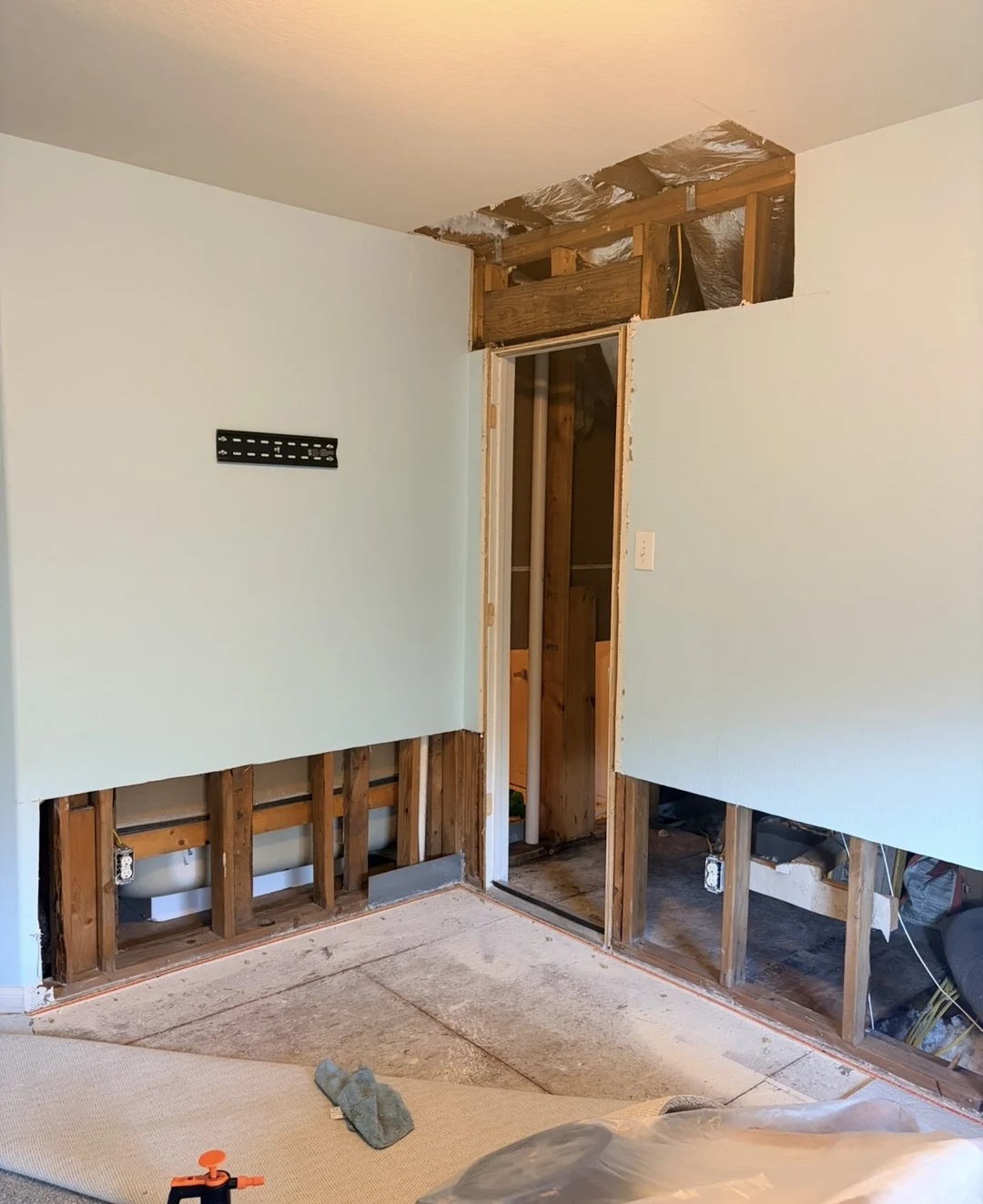
Access behind drywall
Open wall sections provide access to the framing.
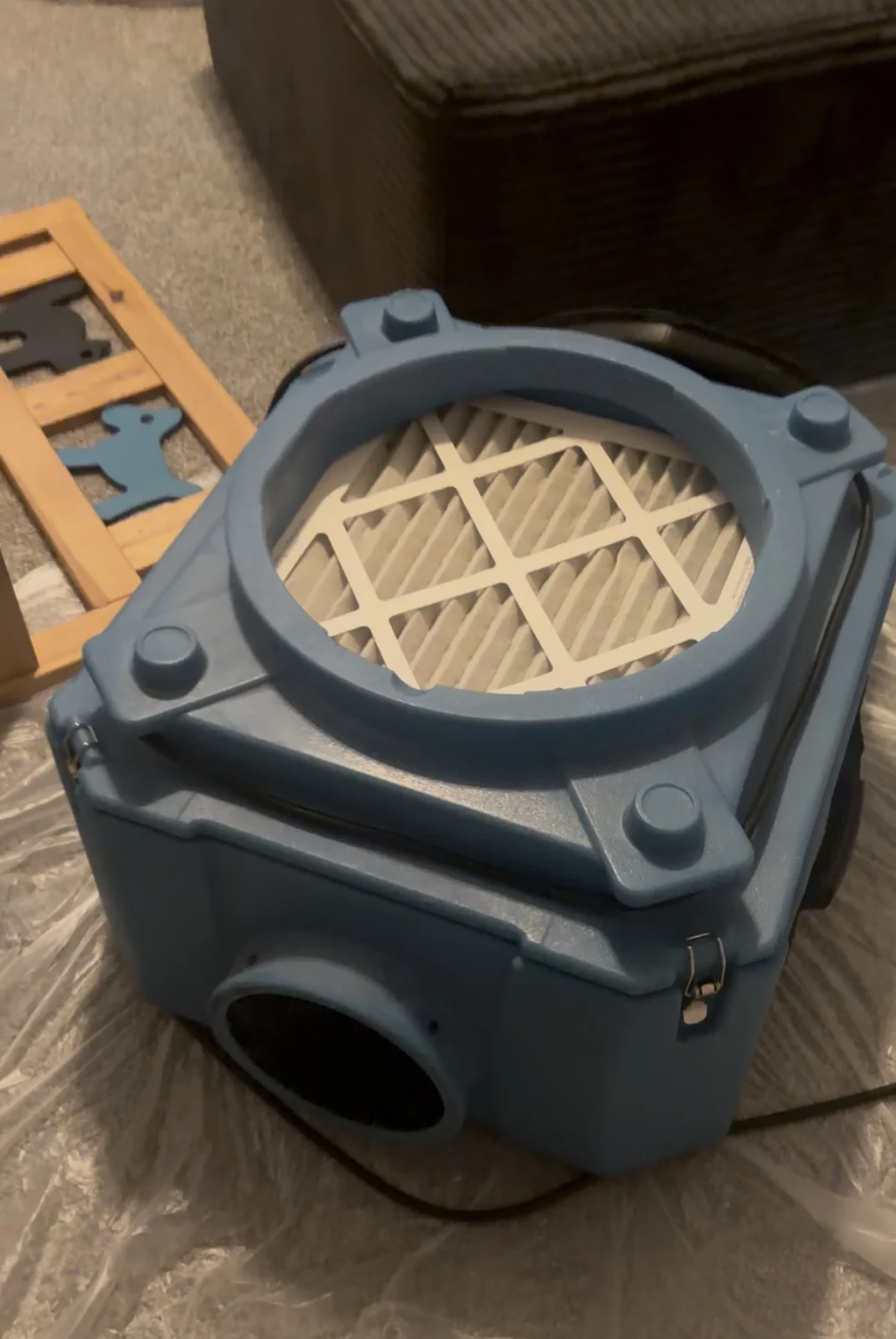
Air filtration
A portable air scrubber used during restoration work.
Thermal images show temperature differences. Direct moisture readings help confirm suspected areas.
Our drying process
A clear plan from inspection to completion.
Equipment and drying time depend on your property’s materials, access and moisture readings.
See Renova’s complete process →- 01
Inspect and establish conditions
We investigate the water path, record affected materials and establish initial moisture readings.
- 02
Prepare the affected area
Standing water and unsalvageable materials are addressed, and access is created when the authorized scope requires it.
- 03
Place drying equipment
Air movers, dehumidifiers and specialty systems are selected and positioned for the documented conditions.
- 04
Monitor and document
Follow-up readings show the direction of progress and help determine when drying goals have been met.
Can you do a moisture inspection after water damage and check behind walls?
Yes. We use moisture meters to check accessible drywall, baseboards and other materials. Where readings or site conditions point to a concealed cavity, we explain whether additional access is needed to confirm hidden moisture.
Do you do room-by-room moisture mapping after a plumbing leak?
We record moisture meter readings by room, location and material to map where water traveled. Repeat readings at documented points help us track drying progress.
Can you check for hidden moisture under hardwood flooring or in the subfloor?
We assess the flooring and accessible subfloor, compare readings in affected and unaffected areas where practical, and discuss whether targeted access or specialty floor drying makes sense.
Can you document moisture readings before closing up drywall or starting repairs?
We can document accessible material readings and compare them with the drying goals for the affected materials before recommending when the area is ready for repairs.
How do you know where moisture has traveled?
We combine the known source and water path with visual inspection, direct moisture readings and thermal imaging where useful. Infrared patterns guide investigation, while meters help confirm material moisture.
How long does structural drying take?
The timeline depends on the water, materials, access and measured progress. Renova monitors conditions rather than promising the same number of days for every property.
How many air movers and dehumidifiers are needed?
Equipment needs depend on the size of the affected area, the materials involved and the drying conditions. The plan may change when materials are opened, removed or shown by readings to be drying differently than expected.
Does thermal imaging prove a wall is wet?
No. A thermal camera shows temperature differences, not moisture itself. Suspected areas should be checked with appropriate moisture-measuring tools and interpreted with the site conditions.
Can hardwood flooring be dried in place?
Some flooring assemblies may be candidates for specialty drying, while others may require removal. The water category, construction, duration, finish condition and moisture readings all matter.
Can Renova repair materials that must be removed?
Yes. After mitigation and drying needs are understood, Renova can prepare a separate reconstruction scope for drywall, flooring, trim, paint, cabinets and other affected finishes.
Available 24 hours
Water may be hidden. Start with measured conditions.
Call Renova for structural drying and moisture detection across Greater Houston. Tell us where the water appeared, which rooms or materials are affected and when you first noticed it. We review those details and confirm inspection availability with you. An online request is not a booked appointment.
Call (281) 796-4507